Currently Empty: R0,00
How AI is Changing Education in South Africa
classifindinfo
- September 18, 2025
- Comment 0
The Rise of AI in Education
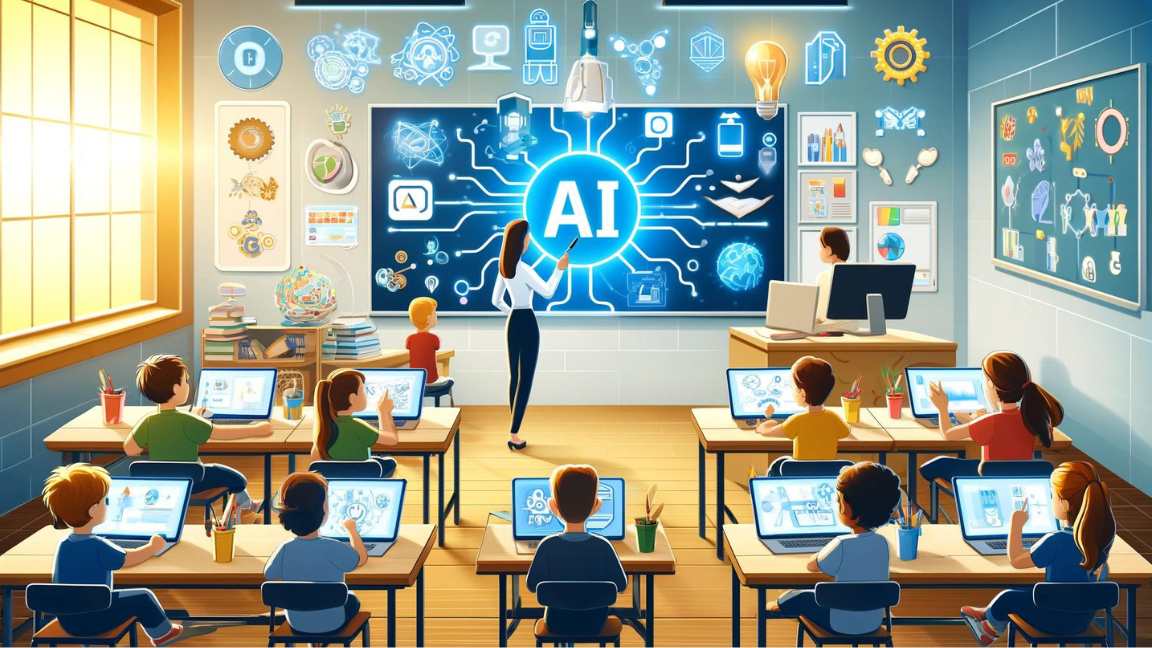
Artificial Intelligence (AI) is no longer a futuristic concept; it is already shaping how we live, work, and learn. Across the globe, education systems are transforming with AI-powered technologies that make learning smarter, faster, and more accessible. In South Africa, where the education system faces long-standing challenges such as overcrowded classrooms, teacher shortages, and inequality between urban and rural schools, AI is emerging as a game-changer.
Why South Africa is Embracing AI in Schools
South Africa’s educational landscape is unique—it faces some of the most pressing challenges on the continent, but also has one of the most rapidly growing technology sectors. Policymakers, educators, and private companies are beginning to realize that AI could bridge gaps that traditional teaching methods cannot. From grading assignments automatically to offering personalized learning for students at different skill levels, AI is being tested and rolled out across different parts of the country.
Global Trends Influencing Local Adoption
South Africa isn’t isolated in this movement. Globally, AI in education is projected to become a multi-billion-dollar industry by 2030. Countries like China and the United States are already investing heavily in AI-based education platforms. These global shifts influence how South Africa designs its educational strategies, ensuring it doesn’t fall behind in preparing students for the digital age.
Understanding AI in the Context of Education
What AI Really Means for Teachers and Students
When people hear “AI,” they often imagine robots replacing teachers. In reality, AI in education is less about replacement and more about support. Think of it as an intelligent assistant that helps teachers manage their workload while giving students access to customized learning. For example, AI tools can adapt to a student’s learning pace, identify areas where they struggle, and provide additional resources.
Common Misconceptions About AI in Classrooms
A common fear is that AI will make learning impersonal or mechanical. But the opposite is true when implemented correctly. AI allows for more individualized learning experiences, something traditional classrooms struggle with due to high student-to-teacher ratios. Another misconception is that AI requires high-tech, expensive infrastructure. While advanced solutions can be costly, many AI-powered educational tools are cloud-based and scalable, meaning they can be implemented even in schools with limited resources.
Current State of Education in South Africa
Challenges Facing the South African Education System
South Africa’s education system has long struggled with inequality. Many rural schools lack basic infrastructure, internet connectivity, and teaching materials. Classrooms are overcrowded, with one teacher sometimes responsible for 50 or more students. These issues limit personalized learning and put immense pressure on teachers.
Why Traditional Methods Alone Are Not Enough
While traditional teaching methods are valuable, they cannot fully address the modern challenges South Africa faces. For example, in subjects like mathematics and science, many students fall behind due to the lack of individualized attention. AI has the potential to complement traditional methods by offering adaptive learning experiences and real-time assessments, something textbooks and chalkboards cannot provide.
How AI is Being Implemented in South African Schools
AI-Powered Learning Platforms
Some schools are already experimenting with platforms that use AI to track student progress and provide adaptive lessons. These tools analyze how a student learns, highlight weaknesses, and recommend resources to improve. For instance, if a student struggles with fractions, the system adjusts the difficulty level and provides additional practice.
Virtual Classrooms and Intelligent Tutoring Systems
AI-driven tutoring systems are stepping in where teachers can’t always be present. These systems can answer student questions in real-time, guide them through problem-solving, and even provide feedback. This is particularly useful in rural areas, where teacher shortages remain a major issue.
AI in Administrative and Management Roles
Beyond teaching, AI is also being used in school management. Automating attendance, grading, and scheduling allows teachers to focus more on instruction rather than paperwork. School administrators can also use AI to predict student performance trends, identify drop-out risks, and allocate resources more efficiently.
The Benefits of AI in South African Education
Personalized Learning Experiences
One of the greatest advantages of AI in education is personalization. Every student learns differently—some grasp concepts quickly, while others need extra time. AI adapts to each learner’s pace, ensuring no one is left behind. This could drastically improve pass rates in subjects like mathematics, which has historically been a stumbling block for many South African learners.
Reducing Teacher Workload and Burnout
Teachers in South Africa are often overburdened, not only with large classes but also with administrative tasks. AI can automate grading, attendance tracking, and lesson planning, freeing up teachers to focus on meaningful interactions with students. By reducing workload, AI could also help lower teacher burnout rates, which are alarmingly high.
Bridging the Urban-Rural Education Gap
Perhaps the most transformative aspect of AI in South Africa is its potential to reduce educational inequality. Rural schools that lack specialist teachers could use AI-powered platforms to give students access to quality education. For example, a rural school without a qualified math teacher could still provide learners with AI-driven math tutorials and practice sessions.
The Role of AI in Higher Education and Universities
Research and Data-Driven Learning Models
In South Africa’s universities, AI is not only enhancing the classroom experience but also reshaping research and academic innovation. Universities generate enormous amounts of data every year—from student performance records to institutional reports—and AI can analyze this information to identify learning trends, predict dropout risks, and optimize teaching strategies. For example, an AI model can detect when a student is at risk of failing a course based on attendance patterns and assignment submissions, giving lecturers an opportunity to intervene early.
Moreover, research in fields such as engineering, medicine, and social sciences is being accelerated by AI tools that process complex data sets at speeds impossible for humans. For medical students, AI simulations can replicate real-world patient interactions, preparing them for practical situations before they step into hospitals. In humanities and social sciences, AI-driven language analysis helps researchers study linguistic patterns across South Africa’s 11 official languages, making learning more inclusive.
AI in Online Learning Platforms
The COVID-19 pandemic highlighted the importance of online education, and many South African universities quickly transitioned to digital platforms. AI has taken this further by making e-learning smarter and more interactive. Online learning platforms powered by AI can adjust to students’ knowledge levels, recommend resources, and even create personalized study schedules.
For example, platforms like Coursera and edX use AI to recommend courses based on learners’ progress and interests. Local universities are adapting similar models to keep students engaged and motivated. With South Africa’s growing number of distance-learning institutions, AI ensures that online education is not just about watching lectures but also about interactive, personalized growth.
How AI is Shaping Skills for the Future Workforce
Preparing Students for the Fourth Industrial Revolution
The world is rapidly moving into what is often called the Fourth Industrial Revolution, where AI, robotics, and automation dominate industries. For South Africa to remain competitive, students must develop the skills needed to thrive in this new era. AI in education prepares learners by fostering critical thinking, problem-solving, and digital literacy. Instead of relying solely on rote memorization, AI-driven platforms encourage interactive and applied learning, equipping students with the tools to adapt to future job markets.
Employers in South Africa increasingly demand digital skills, and AI-powered educational tools help align classroom learning with real-world workforce needs. For instance, coding platforms enhanced with AI can guide students through programming exercises, offering instant corrections and explanations. This prepares them for jobs in software development, data science, and AI engineering—fields that are expanding rapidly in the country.
AI in Vocational and Skills-Based Education
Beyond universities, AI also plays a crucial role in vocational training and skills development. South Africa has a large youth population, many of whom need practical skills rather than traditional academic degrees. AI-driven vocational platforms can train students in trades like automotive repair, construction, and healthcare through simulations and virtual reality experiences.
For example, a student training to become a nurse could use an AI-powered simulation to practice medical procedures without the risk of harming a patient. Similarly, artisans could learn through step-by-step AI-guided tutorials. By integrating AI into vocational training, South Africa can address its unemployment challenges while equipping young people with marketable skills.
Challenges and Risks of AI in Education
Digital Divide and Lack of Access
While AI offers immense promise, one of the biggest challenges in South Africa is unequal access to technology. Many rural schools still lack electricity, internet connectivity, and basic digital devices. Without addressing these issues, AI risks widening the educational gap rather than closing it. Urban schools with resources may advance rapidly, while rural schools fall further behind.
The digital divide isn’t just about infrastructure—it’s also about affordability. Laptops, tablets, and reliable internet remain out of reach for many students from low-income households. Until South Africa invests in widespread digital infrastructure, AI integration may remain uneven.
Concerns About Data Privacy and Security
Another major challenge is ensuring data privacy and security. AI systems collect large amounts of student data, including performance metrics, attendance records, and even behavioral patterns. If not properly managed, this data could be misused or fall into the wrong hands. South Africa’s education system must develop strict data protection policies to safeguard students’ privacy.
Fear of Replacing Teachers with Technology
A common fear among teachers is that AI might replace them. While this fear is understandable, the reality is different. AI cannot replace the emotional intelligence, mentorship, and human connection that teachers provide. Instead, AI should be viewed as a tool that supports teachers by reducing administrative burdens and giving them more time to engage with students. Successful AI integration requires teachers to work alongside technology, not compete with it.
Government and Policy Support for AI in Education
Current Policies and Initiatives in South Africa
The South African government has recognized the importance of digital transformation in education. Policies such as the Department of Basic Education’s e-Education strategy highlight the need for integrating digital tools into classrooms. While these policies are still in early stages, they pave the way for AI adoption by creating frameworks for digital learning.
Additionally, the government has begun pilot projects where AI-driven learning platforms are introduced in select schools. These projects focus on mathematics and science education, aiming to improve performance in subjects where students traditionally struggle.
Partnerships with Private Tech Companies
Public-private partnerships are playing a major role in AI’s integration into South African schools. Technology companies such as Microsoft, Google, and local startups are collaborating with schools to provide AI-based tools and teacher training. For example, Microsoft’s AI for Education initiatives offer cloud-based platforms that allow teachers to personalize learning for students.
Local startups are also innovating by creating AI platforms tailored to South African contexts, such as language learning apps that support isiZulu, isiXhosa, and Afrikaans. These partnerships ensure that AI solutions are not just imported but also adapted to local needs.
Case Studies of AI in South African Education
Successful AI Pilots in Public Schools
Several South African schools have started experimenting with AI-driven education, and the results are promising. For example, in Gauteng, a few schools introduced AI-powered learning management systems to improve mathematics and literacy. Teachers reported that students engaged more actively with the material, and learners who previously struggled showed noticeable improvement.
In KwaZulu-Natal, an AI-based language learning app was piloted to help students improve their English writing and reading comprehension. The app provided instant grammar corrections, vocabulary suggestions, and interactive exercises. Teachers observed that students were not only learning faster but also more confidently.
These early pilots show that even in resource-constrained environments, AI can make a difference. While these programs are still in their infancy, they provide a blueprint for expanding AI initiatives to more schools across the country.
AI Startups Driving Change in Education
South Africa’s growing tech ecosystem has given rise to several startups focusing on AI in education. Companies like Snapplify, Umuzi, and SiMODiSA are creating AI-driven platforms that address local challenges. Snapplify, for instance, provides digital textbooks and interactive content powered by AI analytics, helping teachers understand how students engage with learning materials.
Meanwhile, initiatives like Umuzi are using AI to prepare young people for careers in data science and software engineering, aligning education with workforce demands. These startups prove that innovation doesn’t have to come from global giants; local solutions tailored to South African needs can be just as powerful.
The Future of AI in South African Education
Predictions for the Next Decade
In the next 10 years, AI is expected to become deeply integrated into South Africa’s education system. As digital infrastructure improves and internet connectivity expands, more schools will gain access to AI-powered platforms. By 2035, it is likely that AI tutors, adaptive learning platforms, and intelligent grading systems will be a standard part of both primary and secondary education.
AI will also play a bigger role in addressing language diversity in South Africa. With 11 official languages, creating inclusive learning platforms has always been a challenge. However, advancements in natural language processing (NLP) mean that AI can soon support students in their home languages while still preparing them for global communication in English.
How Teachers’ Roles Will Continue to Evolve
Rather than being replaced, teachers will transform into facilitators of learning. Their role will shift from delivering content to guiding students through interactive and personalized AI-based systems. Teachers will spend less time grading and more time mentoring, motivating, and developing critical thinking skills in students.
In rural and underprivileged areas, teachers may use AI as a “teaching assistant,” helping them manage large classes and offering additional support to struggling students. The teacher of the future will be both an educator and a technology navigator, ensuring students get the best of both worlds—human connection and AI-powered learning.
Comparing South Africa with Other African Countries
Nigeria, Kenya, and Ghana’s AI Adoption in Education
South Africa is not alone in its AI journey; other African nations are also experimenting with AI to transform their education systems. In Nigeria, AI-powered platforms are being used for remote learning, especially in underserved areas. Kenya has invested heavily in digital education, with AI-based tools supporting STEM subjects. Ghana, on the other hand, has partnered with global organizations to bring AI-driven literacy programs to rural schools.
Lessons South Africa Can Learn
By observing these countries, South Africa can identify best practices and avoid pitfalls. For example, Kenya’s heavy investment in teacher training shows that technology alone isn’t enough—teachers must be prepared to use it effectively. Nigeria’s approach to remote learning highlights the importance of mobile-based AI solutions, given the high smartphone penetration in Africa. South Africa can combine these strategies with its own unique strengths to create a well-rounded AI education framework.
Strategies for Effective AI Integration in Schools
Teacher Training and Development
For AI to succeed in education, teachers must be equipped with the right skills. Professional development programs are essential to help teachers understand and use AI tools confidently. This includes training in digital literacy, classroom technology management, and data analysis. Without teacher buy-in, AI initiatives risk being underutilized or misunderstood.
Additionally, teachers need ongoing support. A one-time workshop is not enough; continuous training ensures that educators can keep up with evolving technologies. Peer-to-peer networks, online training modules, and mentorship programs can play an important role in helping teachers adapt.
Building Digital Infrastructure
Infrastructure remains the backbone of AI adoption. Schools need reliable internet, access to devices, and power supply to make AI integration sustainable. South Africa’s government and private sector must work together to provide affordable connectivity and hardware. Solar-powered schools, mobile internet hotspots, and community learning hubs could be innovative solutions for rural areas where infrastructure is weak.
Furthermore, digital infrastructure must be inclusive. Accessibility features like text-to-speech for visually impaired learners or AI-driven sign language interpreters can ensure that no student is left behind.
Ethical and Cultural Considerations
Ensuring AI Respects Local Languages and Cultures
For AI to truly succeed in South Africa, it must reflect the country’s cultural and linguistic diversity. Too often, AI tools are designed for English-speaking contexts, which can alienate students whose first language is isiZulu, Sesotho, or Afrikaans. AI developers must ensure that platforms are multilingual and culturally sensitive.
Additionally, AI should support indigenous knowledge systems rather than replace them. Education in South Africa is not only about academics but also about preserving cultural identity. AI platforms must balance global learning standards with local traditions and values.
Balancing Technology with Human Connection
While AI offers many benefits, education is still deeply human. A child’s motivation, confidence, and emotional growth cannot be nurtured by machines alone. Teachers, parents, and communities must remain central to the learning experience. The challenge is to strike a balance: use AI to handle repetitive tasks and provide personalized learning, while allowing teachers to build relationships and guide emotional development.
Conclusion – The Road Ahead
AI is no longer a futuristic dream—it is already reshaping classrooms across South Africa. From personalized learning platforms to intelligent tutoring systems, AI offers solutions to some of the country’s most pressing educational challenges. While obstacles like the digital divide and data privacy remain, the potential benefits far outweigh the risks.
For South Africa, the real opportunity lies in using AI not just to modernize education, but to make it more inclusive and equitable. With the right policies, infrastructure, and teacher support, AI can help create a generation of learners ready to thrive in the digital age. The road ahead requires careful planning, but one thing is clear: AI is here to stay, and its impact on South African education will only continue to grow.
FAQs
1. Will AI replace teachers in South Africa?
No, AI will not replace teachers. Instead, it will assist them by reducing administrative tasks and offering personalized learning tools, allowing teachers to focus on mentorship and student engagement.
2. How can rural schools benefit from AI?
AI-powered platforms can bring quality education to rural schools, even where specialist teachers are lacking. Virtual tutors and adaptive learning apps help bridge the urban-rural education gap.
3. Is AI affordable for South African schools?
While advanced AI systems can be costly, scalable cloud-based solutions and partnerships with tech companies make AI more accessible. Over time, costs are expected to decrease as adoption grows.
4. What subjects benefit the most from AI integration?
Subjects like mathematics, science, and languages see the biggest improvements with AI because it provides adaptive learning, instant feedback, and interactive practice.
5. How can parents support AI-based education?
Parents can support AI learning by encouraging their children to engage with digital tools at home, monitoring progress, and collaborating with teachers to ensure technology enhances—not replaces—human connection.